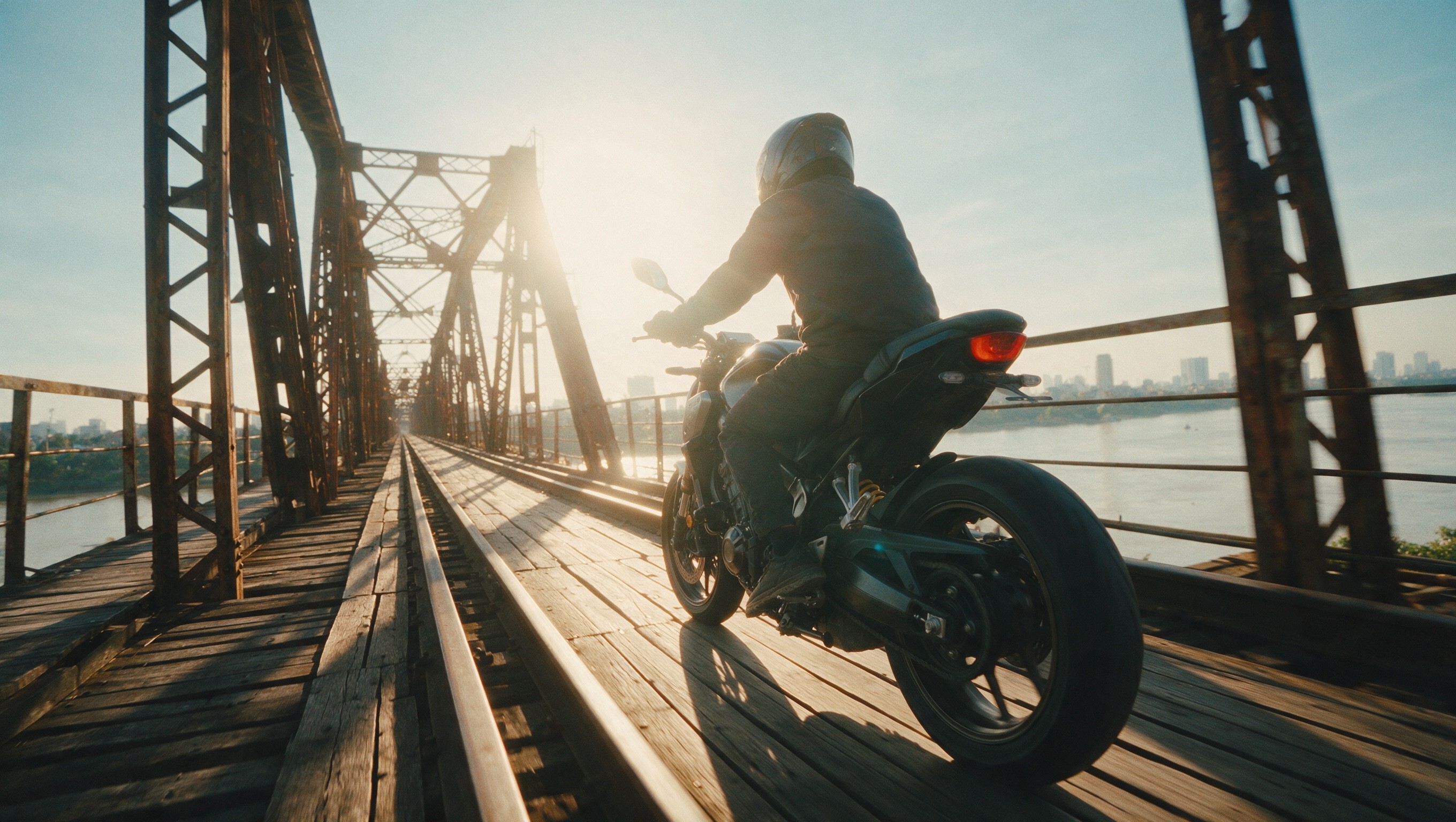
What to do after a motorbike accident in Vietnam on a rented bike: a checklist, and the insurance that decides who pays
The steps after a crash on a rented bike in Vietnam: people first, the ambulance number, what to photograph, who to message, what not to sign or hand over, and the three insurance conditions that decide whether the hospital and the evacuation are paid.
Fact-checked: August 30, 2026
Live rental prices, and every bike shows whether it needs a licence
Browse bikesThe short answer
People first, then evidence, then messages, and only then money. Check yourself and everyone involved, call the ambulance on 115 if anyone is hurt, photograph everything before it is moved, and tell the rental. Do not sign what you cannot read, do not hand your passport to anyone at the scene, and do not agree to a payout in the first minutes. Whether the hospital is paid for later depends on your insurance, and that was decided before you rode, at the rental counter.
At the scene
People first: check yourself and everyone involved. 115 is the ambulance number. Photograph everything before anything is moved: the positions of the vehicles, the damage, the documents and the street. Message the rental, and if the request went through us, message us too: in a dispute we take the side of the guest, and our leverage is the rental place on the platform, up to removing it.
Do not sign documents you cannot read. Do not hand your passport to anyone at the scene. Do not agree to on-the-spot payouts while in shock: numbers said in the first ten minutes are always wrong, in both directions. We do not describe the police procedure or the deadlines for a report, because we have no source we trust for them; ask your insurer and the rental what they need from you.
The three conditions that decide who pays
Read your travel policy for three separate conditions. First: is motorcycle riding covered at all? On many policies it is an exclusion by default and a paid add-on at best, often limited to 50cc or 125cc. Second: the licence clause. Cover applies only if you are licensed for the vehicle you ride, both at home and in the country you ride in. Third: the helmet clause. Break any of the three and the insurer has a clean reason to refuse the claim.
What refusal means in practice: the ambulance, the surgery and a medevac flight to Bangkok or home are billed to you personally. A medevac is a chartered flight, not a seat on a plane, and nobody can quote you the total in advance. That unpredictability is the whole risk. The licence the bike needs in Vietnam, and what we could not confirm about the other convention, are in /en/guide/vietnam-idp-1949-vs-1968.
What you are liable for on a rental
An impounded rental is still your responsibility: you settle both the fine and the rental losses. And the risk is not only yours: article 264 of the Criminal Code makes the person who hands over a vehicle liable too, if someone not qualified to ride it causes serious harm: a death, an injury to one person assessed at 61 percent or more, or property damage of 100 million dong or more. That is why rentals ask for your licence and hold on to something, and why the deposit is a conversation worth having before the ride. What to leave and what not to leave is in /en/guide/deposits-and-documents.
Before you ride
Have a motorcycle category and a 1968 permit, and rent whatever suits the trip. Have neither, and the honest options are a scooter of up to 50cc, a guided tour where the operator provides the bike, or not betting your health budget on luck. Photograph the bike at pick-up and at return so a dispute about damage has evidence on both sides. We are a platform and not a rental; if something goes wrong during a rental arranged through us, message us. In a dispute we take the side of the guest.
Every bike on EastRide shows whether it needs a licence.
Browse bikes of Vietnam